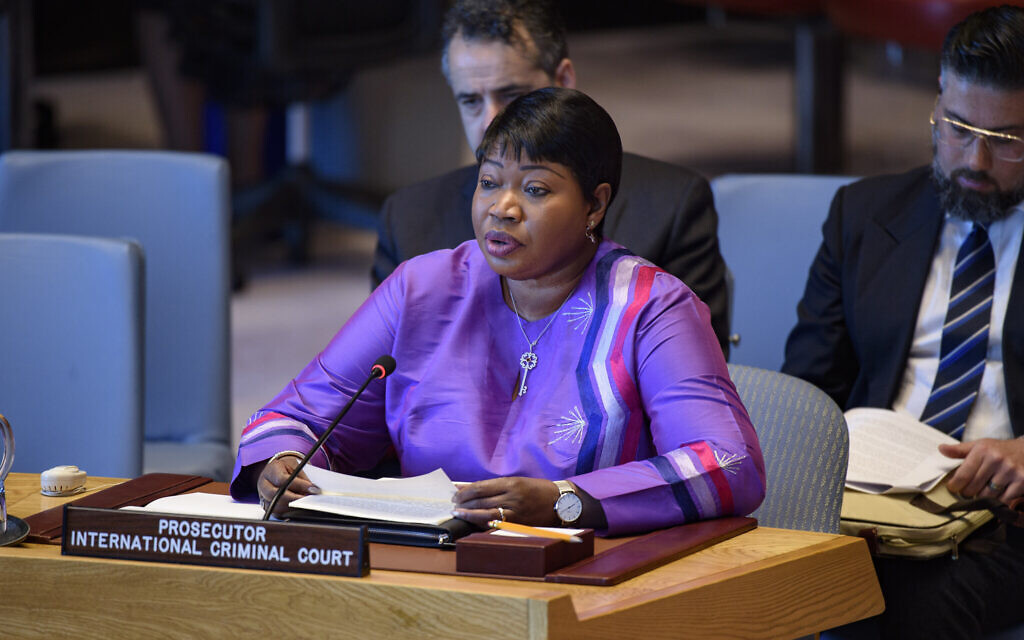
Fatou Bensouda, Chief Prosecutor for the International Criminal Court (ICC), briefs the Security Council on the situation in Libya.
Former Chief Prosecutor of the International Criminal Court (ICC), Fatou Bensouda, has revealed that she and her family were subjected to intimidation, surveillance, and alleged attempts to influence her work during sensitive international investigations, including the Palestine case.
Speaking in an exclusive interview on Al Jazeera’s Talk to Al Jazeera, Bensouda said the pressure began subtly but later escalated into direct encounters that made her feel insecure in her own home in The Hague.
According to her, two unidentified men once visited her residence and handed her an envelope containing $500, claiming it was from someone she had helped.
She said the visit was interpreted as a warning that her movements and residence were being monitored.
“I got the message that they know where I live,” she said, explaining that she immediately reported the incident to ICC security and Dutch authorities.
Bensouda further disclosed that investigations into international cases, including Palestine, Afghanistan, and other situations under ICC scrutiny, attracted growing pressure from powerful actors.
She said she later met the then head of Israel’s intelligence agency Mossad, Yossi Cohen, in what she described as a series of meetings aimed at discouraging the continuation of investigations into alleged war crimes in Palestine.
“What was clear was that they did not want the investigations into the situation in Palestine to go on,” she said, adding that she was repeatedly told to stop the investigations.
Bensouda stressed that she refused to bow to pressure, insisting that her duty as prosecutor was guided by an oath to act “without fear or favour.”
However, she admitted that the experience left her feeling insecure, particularly regarding the safety of her family.
She also revealed that she received little visible protective action from host authorities at the time, despite reporting the incidents.
The former ICC prosecutor further noted that she became the first person in the institution’s history to be sanctioned by the United States in 2020, describing the sanctions as having significant personal and professional consequences, including financial restrictions.
Despite the challenges, she maintained that she stood by her decisions, saying the work of the ICC is often shaped by tensions between justice and global political interests.
She called on state parties to do more to protect international judicial officials and ensure the independence of the court from political interference.
By Adama Makasuba







Recent Comments