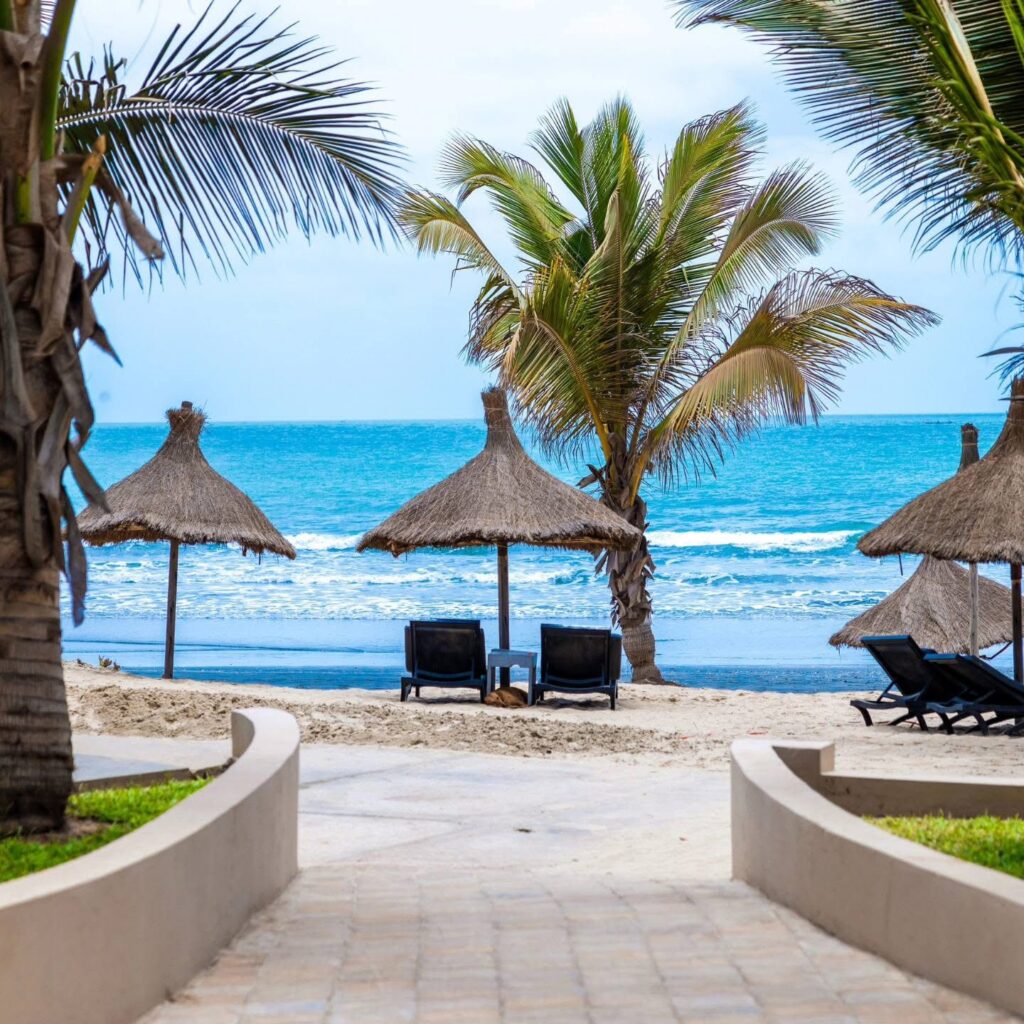
The Gambia Tourism Board (GTBoard) has warned that The Gambia must move beyond its traditional sun-and-beach image and diversify its tourism products if it is to remain competitive in the global tourism market.
The message dominated the Tourism Stakeholder Convergence held at Paradise Beach Hotel on 8 July, where government officials, tourism operators, development partners and community representatives gathered to review the 2025/2026 tourist season and map out priorities for the year ahead.
Despite recording growth in tourist arrivals, higher tourism receipts and an expansion of source markets, stakeholders agreed that the country still faces significant challenges that threaten its long-term competitiveness.
Speaking at the forum, GTBoard Governing Body Chairman Bamba Saho said the meeting was not organised to celebrate achievements but to honestly assess the industry’s shortcomings and identify practical solutions.
“We have not come here to be spoken at, nor to congratulate ourselves. We have come to take an honest stock of the season now behind us and prepare together for the one ahead,” Saho said.
He warned that while tourism has made progress, unresolved issues including coastal land management disputes, encroachment within the Tourism Development Area (TDA), investor concerns over land ownership and limited tourism products continue to undermine the sector.
“If we are to be more competitive, we must offer the world more than a beach,” he said.
Saho urged greater investment in river tourism, cultural and heritage attractions, birdwatching, wellness tourism and the meetings, incentives, conferences and exhibitions (MICE) market, describing them as sectors with significant untapped potential.
The convergence, held under the theme “Strengthening Partnerships for a More Competitive and Sustainable Destination,” also sought to gather industry feedback, assess the 2025/2026 season and develop recommendations for the next tourism season.
Permanent Secretary at the Ministry of Tourism, Arts and Culture, Amie Njie-Joof, described the gathering as another important step towards strengthening collaboration across the tourism sector.
She said the meeting also provided stakeholders with updates on the implementation of recommendations made during the previous convergence, as well as Cabinet’s approval of the country’s new Marketing, Branding and Investment Strategy and its new tourism brand.
Njie-Joof reaffirmed government’s commitment to creating an enabling environment for GTBoard to lead destination marketing and tourism product development in line with the GTBoard Act 2011.
She stressed that tourism cannot succeed in isolation and called for stronger partnerships between government institutions, the private sector and local communities.
The Permanent Secretary also encouraged tourism operators to embrace innovation, sustainability and resource efficiency while developing authentic visitor experiences capable of meeting the expectations of modern travellers.
“At the institutional level, it is prudent to develop a structure which is government-led, private sector-driven and community welfare-oriented,” she said, adding that the concept of “Team Gambia” should guide future tourism promotion efforts.
GTBoard Director General Ida Jeng-Njie echoed the call for stronger collaboration, describing stakeholders as partners rather than observers in the country’s tourism development.
She revealed that rebuilding Destination Gambia’s image through stronger branding and targeted marketing campaigns would be central to the Board’s strategy going forward.
According to her, GTBoard will intensify digital marketing, public relations campaigns, trade fairs, study tours and international exhibitions while working to improve air connectivity and strengthen public-private partnerships.
“Our vision is rooted in inclusivity and progressive principles. We view you, our stakeholders, industry leaders and community voices, not just as observers, but as vital development partners,” she said.
The convergence also featured presentations on Destination Gambia’s new marketing strategy, tourism product development and investment opportunities aimed at positioning the country as a competitive, sustainable and year-round tourism destination.
By Adama Makasuba







Recent Comments