
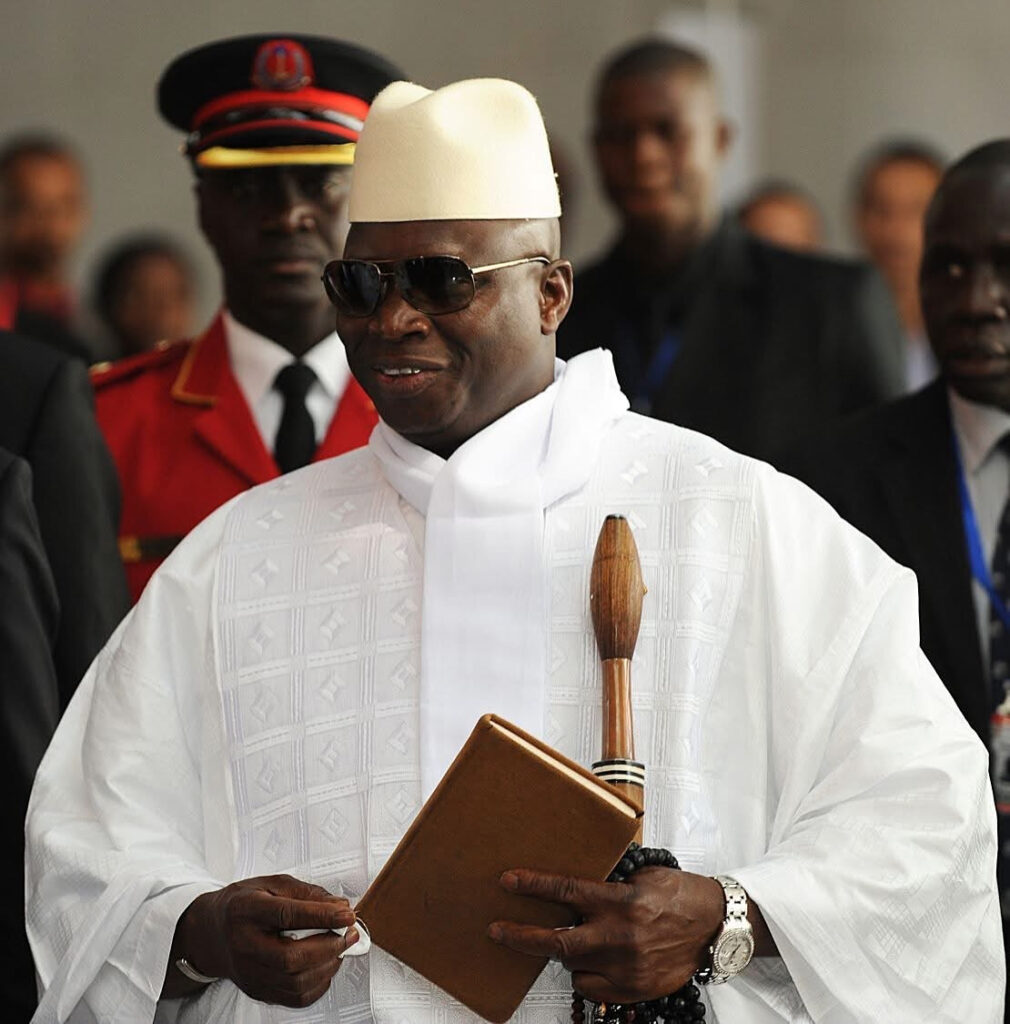
The smiling coast is smiling again as 1,633 graduates celebrate their achievements. Yet behind the joy lies a truth many avoid: Yahya Jammeh, despite the brutality of his regime, founded the University of The Gambia.
Today, that institution produces lawyers, thinkers, and even former dissidents like Banka Manneh, a reminder that history rarely fits into neat moral boxes.
Today, The Gambia is smiling, not the diplomatic smile of state visits, not the weary smile of a people accustomed to swallowing hardship, but the genuine, unfiltered smile of families celebrating their children’s graduation. The smiling coast is smiling again, and for once, our national mood is not shaped by political quarrels, tribal insinuations, or the exhausting theatre of power.
Today, social media is not a battlefield; it is a gallery of joy. Everywhere you look, there are graduation gowns, mortarboards tossed into the air, proud parents in their finest lappa and grand boubou, siblings cheering, friends posing, and young Gambians standing tall in the glow of achievement.
Before anyone misreads my intention, let me say it plainly: I am not on drugs, nor smoking expired weed. I am simply telling the truth as it is, not as people wish it to be. As our elders say, “No matter how much you hate a dog, admit that it has white teeth.” Truth is not a political party. Truth is not a tribe. Truth is not a regime. Truth is truth.
And the truth, the uncomfortable, unvarnished, historically stubborn truth is this: The University of The Gambia exists because Yahya Jammeh created it. That is a fact. It does not erase the human rights violations of his regime. It does not absolve the pain, the disappearances, the exiles, the fear, the silencing, the broken families, or the national trauma.
I am myself a victim of that era. I carry those scars. I know the cost. But scars do not give us the right to distort history. If anything, they impose a greater duty to speak honestly.

For thirty‑five years after independence, The Gambia had no university. An entire generation grew up believing that higher education was something you pursued abroad if you were lucky enough to win a scholarship, if your parents had the means, or if you were willing to work and study in the diaspora.
For the poor, the rural, the unconnected, the children of market women, farmers, fishermen, and drivers, university education was a distant dream, a luxury reserved for the privileged few.
Then came the second republic, and Yahya Jammeh, a man whose rule would later be defined by repression, established the University of The Gambia. This is the paradox of history: a leader who violated rights also expanded access to education.
A regime that silenced journalists also built an institution that would later produce journalists. A government that feared dissent created a university that now teaches critical thinking. History is complicated, and we must have the intellectual maturity to hold multiple truths at once.
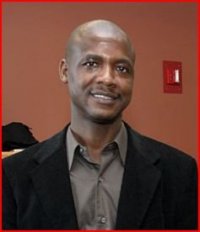
And if anyone doubts the complexity of this legacy, let them look at Banka Manneh, one of the fiercest critics of Yahya Jammeh, a dogged fighter in the diaspora struggle, a man who risked his freedom, his family, and his future to oppose dictatorship. A man who stood on the frontlines of the democratic resistance, who mobilized, organized, and spoke truth to power when truth was dangerous.
Today, that same Banka Manneh — a US‑Gambian, a veteran of the struggle — has graduated from the University of The Gambia with an LLB. Very soon, we will see him wearing the legal wig, standing in court, defending rights, upholding justice, and strengthening the very democracy he fought for.

If that is not the irony of history, what is? If that is not the complexity of national memory, what is? If that is not the stubbornness of truth, what is?
Today, UTG graduates 1,633 students, the highest number in its history. This is not a small achievement. This is a national milestone. This is a quiet revolution. This is the democratisation of knowledge. This is the breaking of generational ceilings. This is the triumph of ordinary Gambian families who have carried extraordinary burdens.
Look at the faces in those graduation photos. You will see the children of vegetable sellers, carpenters, tailors, fishermen, teachers, nurses, soldiers, civil servants, and market women. You will see young people whose parents never set foot in a classroom.
You will see students who studied under candlelight, who walked long distances to school, who juggled work and lectures, who survived on hope and determination. You will see the future of The Gambia not imported, not borrowed, not outsourced, but homegrown.
The University of The Gambia has become one of the most significant contributors to this country’s human resources. Walk into any ministry, any bank, any newsroom, any private company, any NGO, any hospital, and you will find UTG graduates shaping policy, managing institutions, teaching children, healing patients, writing stories, building systems, and influencing national direction.
Even the political class is now populated by UTG alumni, a testament to how deeply the university has penetrated the national bloodstream. This is why today matters. This is why the nation is smiling. This is why families are celebrating. This is why the moment deserves reflection, not revisionism.
We must learn to hold two truths at once: that Yahya Jammeh built the university, and that his regime committed abuses. That the institution he created has transformed lives, and that the system he led inflicted suffering. That progress can emerge from imperfect hands, and that acknowledging this does not diminish the pain of victims. To deny either truth is to lie, and lies, no matter how politically convenient, cannot build a nation.
Today is not about politics. Today is about the graduates. Today is about the mothers who sold vegetables to pay tuition. Today is about the fathers who drove taxis through the night. Today is about the siblings who sacrificed their own dreams so that one of them could graduate.
Today is about the lecturers who taught under difficult conditions, the administrators who kept the institution running, and the students who persevered through strikes, delays, and uncertainty.
Today is about the dignity of achievement. And so, to the graduates: walk tall. You carry the hopes of a small nation with a large heart. You are the bridge between what The Gambia was, what it is, and what it can become.
You are the proof that progress is possible, even in a country where politics is noisy and history is contested. You are the living argument that education remains the most powerful tool for national transformation.
May your degrees not become mere decorations but instruments of service. May your knowledge not inflate your ego but deepen your humility. May your success not isolate you from your communities but strengthen your commitment to them.
And may your journey remind us that nations are not built by perfect leaders but by determined citizens. As our elders say, “Unity is strength.” And as the Wolof remind us, “Lu metti du doy, waaye lu metti day jeex” — hardship does not last forever.
May the smiles we see today become the foundation of a more honest, more educated, and more hopeful Gambia. May the University of The Gambia continue to grow, evolve, and serve.
And may we, as a nation, learn to embrace the full truth of our history, the good, the bad, and the complicated, so that we can build a future worthy of our children.
May the ancestors bless the graduates, steady their steps, and widen their horizons. Ameen.
By Alagi Yorro Jallow






Recent Comments