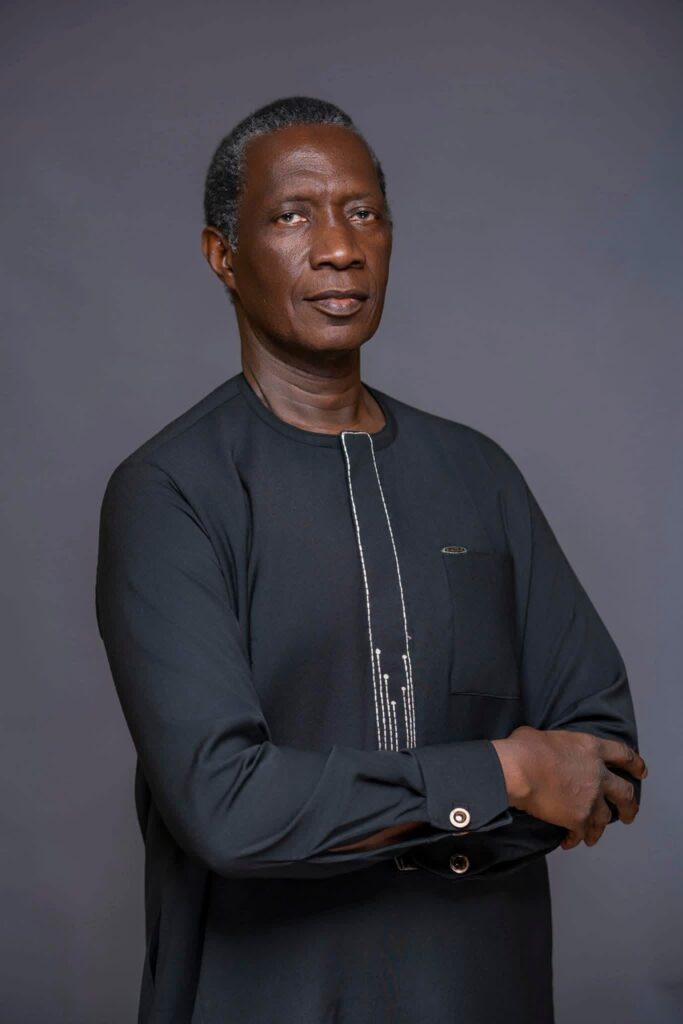
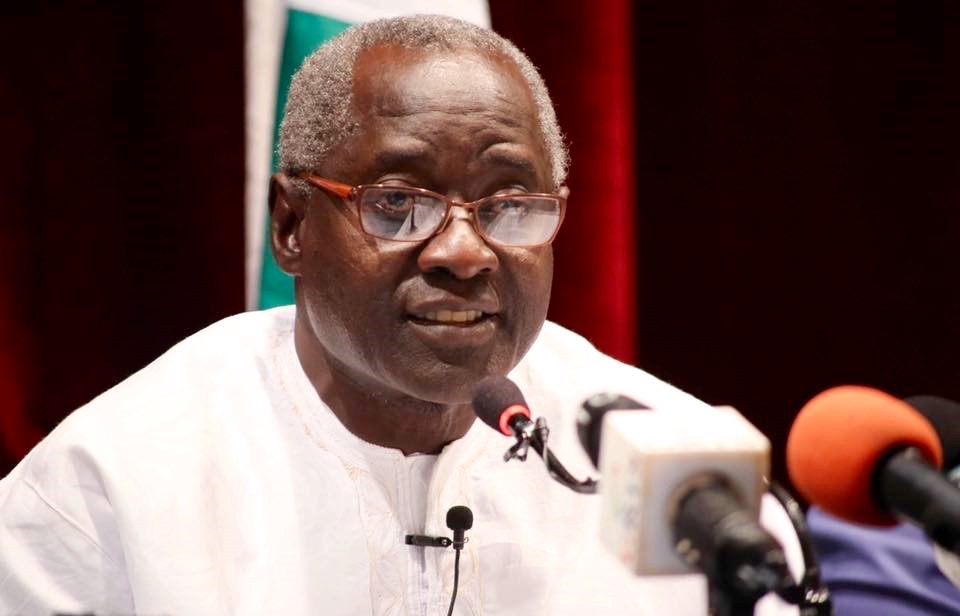
At times, silence in a nation’s political life becomes complicity. Lamin Manneh’s recent interview on Teledal TV, reported by Kerr Fatou on October 17, 2026, is one such moment. His remarks, delivered with the confidence of insider authority, are in fact a troubling exercise in historical distortion, intellectual dishonesty, and political opportunism.
They insult the sacrifices of Halifa Sallah, Sidia Jatta, Hamat Bah, Mai Fatty, Omar Jallow, the diaspora networks, the pro‑democracy activists, and the ordinary Gambians who paid the ultimate price confronting Yahya Jammeh’s dictatorship. They also misrepresent the 2016 political architecture, the role of the United Democratic Party (UDP), and how Adama Barrow emerged as the coalition candidate.
To begin with, Lamin Manneh was never part of the political architecture that confronted Yahya Jammeh. He was not a UDP member during the years when Gambians were beaten, jailed, exiled, and silenced. He was not among the activists who built the fragile alliances that made the 2016 coalition possible. He was not in the trenches when opposition leaders were arrested, when journalists were disappeared, when civil society was suffocated, and when the price of dissent was imprisonment or death.
While Manneh was elsewhere, the party sent UDP executives to prison and searched for a leader. He, like so many others, was afraid until Adama Barrow came forward. During those years, Lamin Manneh worked at the African Development Bank as a translator—a respectable professional path, but one entirely outside the struggle he now claims authority to interpret. His sudden reinvention as a historian of the coalition is therefore not only inaccurate; it is profoundly disrespectful to those who paid the real cost of resistance.
His claim that Adama Barrow campaigned “entirely on Darboe’s name” is a simplistic half‑truth and intellectual dishonesty masquerading as analysis. Barrow was a UDP member, that is correct, but he resigned and stood as an independent candidate precisely because the coalition required a neutral figure who could unify diverse political actors.
If the coalition had chosen Ousainou Darboe, the victory would not have been “Darboe’s victory”; it would have been a national victory, a collective triumph of Gambians across party lines. The coalition was not built on personality; it was built on necessity. It was built on the recognition that no single party, not even the UDP, could defeat a militarised dictatorship alone. Reducing that historic moment to a single man’s reputation trivializes the courage of PDOIS, NRP, GMC, PPP, independent activists, diaspora networks, and ordinary citizens who risked their lives to make the coalition possible.
Manneh’s comparison of Yahya Jammeh as an “elephant” and Ousainou Darboe as a “chicken” is not only intellectually unserious; it is politically incoherent. If Jammeh was an elephant, then Darboe, who faced him repeatedly, who was jailed for confronting him, who endured beatings and persecution, was the man who stood before the elephant without fear.
How many times did Darboe contest elections against Jammeh? How many times did he lose in elections that international observers refused to call free and fair? How many times did he return to the battlefield, refusing exile, refusing silence, refusing compromise? Lamin Manneh’s metaphor collapses under the weight of its own contradiction: the man he calls a “chicken” is the very figure whose courage made the coalition possible.
His assertion that Barrow should not take credit for Jammeh’s removal is equally dishonest. No single person removed Jammeh. The coalition removed Jammeh. The Gambian people removed Jammeh. The international community, ECOWAS, and regional pressure removed Jammeh. Barrow was the face of a collective effort, not the architect of a personal triumph. To deny Barrow any credit is as dishonest as claiming he alone delivered victory. Both extremes distort the truth.
Manneh’s revisionism becomes even more glaring when he attempts to rewrite UDP’s electoral history. He claims Darboe’s reputation alone delivered victory in 2016, yet he ignores that the UDP did not secure a parliamentary majority under Darboe’s direct leadership. The historical record is clear.
In the first legislative election after the 1994 coup, the 1997 National Assembly election, the UDP won 7 of 45 seats. In 2002, the party boycotted the election and won 0 seats. In 2007, it participated and won 4 of 48 seats. In 2012, it again boycotted and won 0 seats.
For two decades under Jammeh’s authoritarian rule, the UDP remained a minority party, not because Darboe lacked stature, but because the electoral environment was neither free nor fair.
The UDP first achieved a significant majority in the April 2017 National Assembly elections, winning 31 of 53 elected seats—an absolute majority in the 58‑member chamber. This historic shift occurred after Jammeh’s removal, after the democratic transition, and under President Adama Barrow’s administration.
If Darboe’s name alone guaranteed victory, why didn’t the UDP secure more National Assembly Members in the years when Darboe personally campaigned for them? Why did the party struggle to convert his personal stature into legislative dominance under Jammeh?
Manneh conveniently avoids these questions because they expose the hollowness of his argument. His attempt to portray Barrow as fearful because he campaigns vigorously is equally unserious.
In every democracy, incumbents campaign. In every competitive election, leaders tour the country. To suggest that Barrow’s campaign activity proves fear misunderstands how electoral politics works. Confidence is not measured by how often a president meets voters; the credibility of his record measures it. Manneh’s argument collapses into political theatre — dramatic, but devoid of substance.
What is most troubling in Lamin Manneh’s interview is not his political preference; it is his intellectual dishonesty. He speaks as though he were present in the rooms where the coalition was negotiated. He speaks as though he were among the activists who faced Jammeh’s brutality. He speaks as though he were part of the UDP’s internal struggles, strategic debates, and sacrifices. He was not.
His attempt to rewrite history is therefore not analysis; it is opportunism. He appropriates a struggle he did not participate in, distorts a coalition he did not help build, and manipulates a narrative he did not witness.
His remarks insult Halifa Sallah—one of the principal architects of the coalition—whose intellectual discipline, political courage, and moral clarity were indispensable to the 2016 victory. They insult Sidia Jatta, Hamat Bah, Mai Fatty, Omar Jallow, and the many coalition partners who subordinated party interest to national survival.
They insult the diaspora activists who mobilised resources, shaped international pressure, and sustained the resistance. They insult the journalists, students, and ordinary citizens who paid the ultimate price confronting dictatorship. Lamin Manneh’s revisionism erases their sacrifices and replaces them with a self‑serving narrative that collapses under scrutiny.
History is not a toy. It is not a political instrument to be reshaped for convenience. It records sacrifice, struggle, and truth. Lamin Manneh’s interview attempts to rewrite that record. This commentary reminds us that Gambians will not allow those who arrived after the battle to distort our history and claim ownership of its victory.
By Alagi Yorro Jallow





Recent Comments