
The news that Essa Faal and his APP–Sobeya party are discussing an alliance with Pres. Adama Barrow’s National People’s Party may be disappointing, but it is hardly surprising.
It once again exposes the betrayal of the trust and bastardization of citizens’ sovereignty for private and partisan gain by individuals who present themselves as principled leaders. This culture of opportunistic alliances, coalition building and cross-carpeting conceals an insidious practice that has undermined governance and national development in The Gambia since independence.
Yes, the Gambia is a multiparty democracy, and the Constitution fully guarantees freedom of political participation and association. But these rights are not divorced from values, responsibility or the public good. Constitutional rights do not excuse politicians or political parties from the duty to uphold democratic principles, demonstrate integrity, and protect the national interest even as they associate and participate in politics.
Among the politicians who have criticized Pres. Barrow most relentlessly, and rightly so, were CA’s Ismaila Ceesay, GDC’s Mamma Kandeh, GMC’s Mai Ahmad Fatty, and APP-Sobeya’s Essa Faal. They exposed Barrow’s corruption, incompetence, and poor leadership. They condemned the Barrow Government as a national disgrace and a liability on the survival, dignity and development of The Gambia and its citizens.
For these same politicians to now join or support the very government they so strongly denounced, when its character, conduct and record remain fundamentally unchanged, is not principled politics. It only entrenches the bad governance, poor leadership, and corruption they once claimed to oppose. That is a national tragedy.
Politics is not and must never become an arena without principles, standards, or accountability. It is inherently value-based because its overriding purpose is public service. Anyone who enters politics should do so to serve the people, protect them from harm, promote their welfare, and defend public interest. Political power is not a private commodity to be traded for appointments, access, protection, or personal advantage.
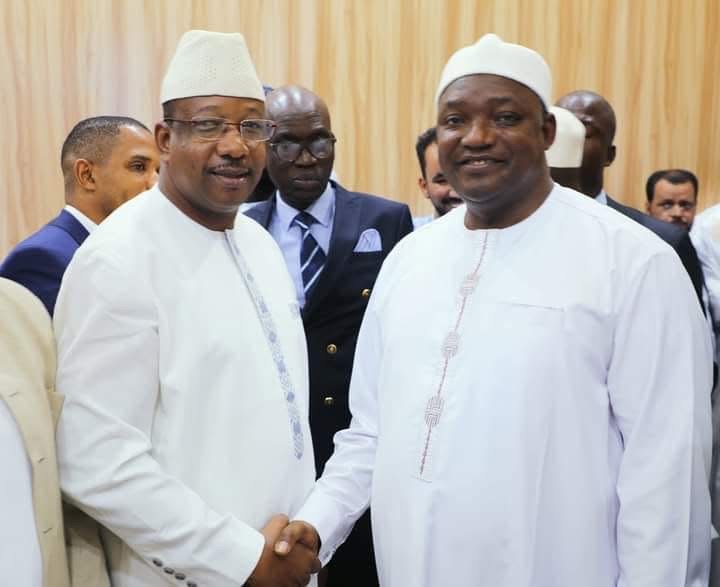
Until yesterday, Essa Faal had consistently argued that President Barrow represented political harm to The Gambia, a harm he claimed he was determined to confront and change. Ismaila Ceesay, Mai Ahmad Fatty, and Mamma Kandeh made similar declarations. They all maintained that a better Gambia without Barrow is possible. What, then, has changed for Essa, Mai, Ismaila, and Mamma to capitulate to Barrow?
When a politician abandons declared principles and climbs into bed with the same NPP administration, without any meaningful change in conduct, policies, or leadership of Barrow, legitimate questions arise about whether their earlier high-sounding slogans and righteous rhetoric were ever genuine. Their actions create the impression that political parties are merely bargaining chips and that opposition politics is only a strategy for attracting the highest bidder.
This is how our country is being destroyed as Politics is reduced to the pursuit of selfish interest through the exploitation of the trust, hope and plight of the people. It erodes public trust, weakens democratic opposition, and teaches citizens that political promises, manifestos, and declarations of principle mean nothing.
When political parties are owned, dominated, or controlled by one individual or a small circle of people primarily concerned with their own selfish advancement, they become transactional enterprises. In such circumstances, the first casualties are accountability, human rights, good governance and the public good. If party politics is primarily about what a person or party can gain, neither the Government nor the opposition will genuinely prioritize anti-corruption, the rule of law, human rights, or the national interest. Every public issue becomes a calculation of personal or partisan advantage. This is the destruction of public service and the corruption of democracy itself.

This is why Wales is creating a law to criminalize lying by politicians. The Gambia, too, needs legislation that establishes safeguards against the ownership, domination, and misuse of political parties by individuals or narrow groups. Such a law should promote internal democracy, transparent financing, accountable leadership, and adherence to declared constitutions, campaign promises, and manifestos. It should also require parties entering formal alliances or coalitions to publish the agreements, principles, policy commitments, and terms underpinning those arrangements.
Our history offers an unmistakable warning. The APRC’s transactional politics, organized around the interests and political survival of one man, Yaya Jammeh, enabled dictatorship, corruption, and widespread human rights violations. From the rise of multiparty politics in the late 1950s through the entire PPP era, transactional politics operated as a governing habit, with politicians shifting loyalties primarily to advance their own political fortunes. This opportunism was a central reason Jawara and the PPP remained in power for three decades.
Consequently, like many countries, The Gambia suffered self-perpetuating rule and became a de facto one-party system because of how political power was acquired, personalized, maintained, and negotiated. When parties and politicians treat political association as an unrestricted marketplace in which principles can be bought and sold, democracy weakens and autocracy flourishes.
This argument does not seek to deny political parties or politicians the right to associate, cooperate or form alliances. Alliances can be legitimate and necessary when they are founded on shared principles, transparent agreements, coherent policies, and a demonstrable commitment to the public good. What must be rejected are alliances that contradict everything the parties and politicians previously claimed to represent and for which no credible public-interest justification is offered.
Transactional politics is a danger to democracy and good governance because it breeds a political culture focused on self rather than the public good. The shameless capitulation of Essa Faal, Mamma Kandeh, Mai Ahmad Fatty, Ismaila Ceesay and others towards a corrupt ruling party must therefore serve as a wake-up call.

When politicians denounce a government as corrupt, incompetent, and a failure, only to embrace it without any corresponding reform or change, they do not only undermine their own credibility but also insult the intelligence of citizens.
Parties and politicians who practice transactional politics betray the very purpose of democratic leadership. They present themselves as servants of the public interest, but their actions reveal a politics driven by personal gain and the search for the highest bidder.
They create political parties and dress them in the language of reform, patriotism, and public service. They promote pro-people messages while using citizens’ hopes and trust as bargaining tools. They reduce politics to a marketplace where principles are traded for access, protection, or personal advantage. This practice is a deception and must stop. It is a scam!
Political parties belong within the democratic architecture of the Republic. They must not be reduced to the private property of their founders or hijacked into bargaining platforms for their personal advancement.
Citizen sovereignty must never be traded for appointments, proximity to power or political convenience. Political association is a constitutional right, but integrity, accountability and loyalty to the public good are democratic obligations.
Those who seek to govern must be judged not merely by the alliances they are legally free to form, but by the principles they uphold, the promises they keep and the public interest they protect.
By Madi Jobarteh





Recent Comments