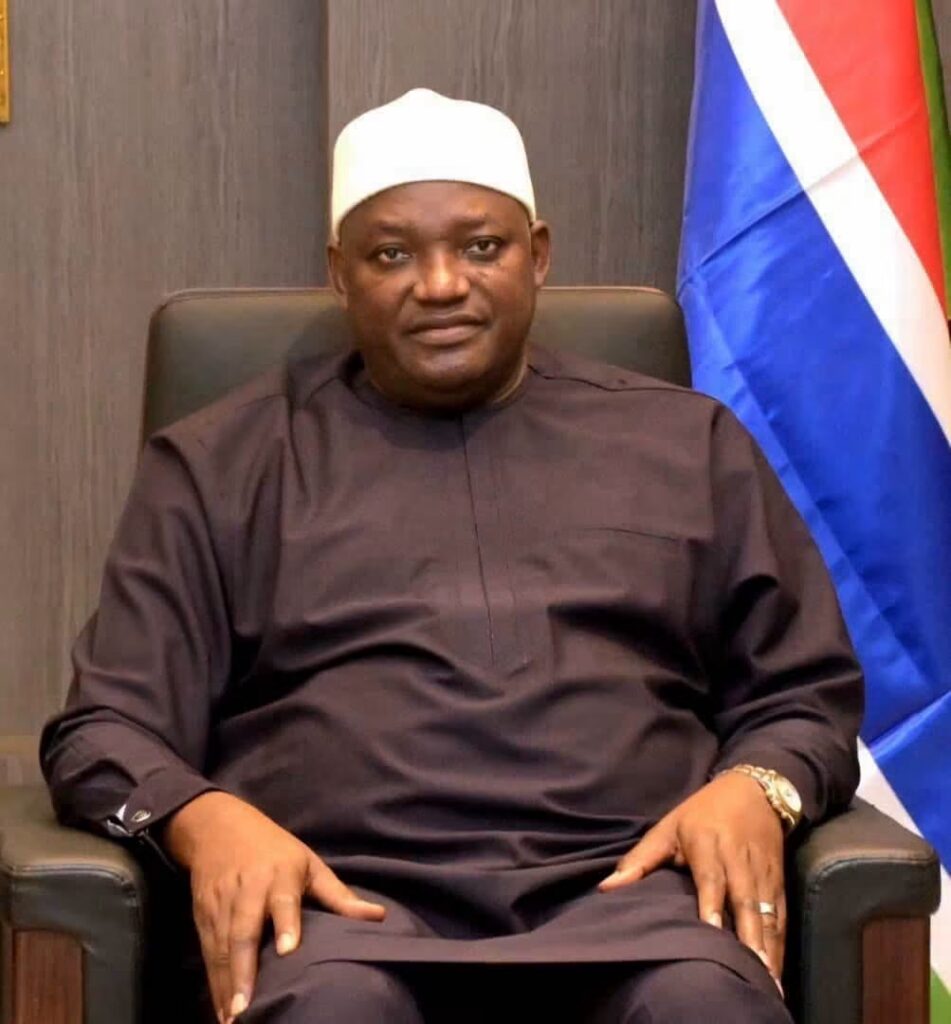
President Adama Barrow’s bid for another term in the December 2026 presidential election is facing renewed scrutiny over term limits, the ECOWAS governance protocol and the country’s stalled constitutional reform process.
Barrow came to power in December 2016 as the candidate of a coalition formed to remove former President Yahya Jammeh. The coalition initially agreed that he would serve a three-year transitional term before stepping aside.
In 2019, however, Barrow abandoned that commitment and announced that he would complete the full five-year constitutional mandate.
The decision triggered the Three Years Jotna movement, which demanded that Barrow honour his original pledge. Protests in January 2020 were met with a police crackdown, with dozens arrested and the movement subsequently banned by the government.
Two radio stations, Home Digital FM and King FM, were also suspended during the crackdown after authorities accused them of promoting the protests. The closures drew criticism from press freedom organisations.
Constitutional reform
Barrow’s government established the Constitutional Review Commission to draft a new constitution. Its 2020 draft proposed a two-term presidential limit, with Barrow’s first term counted.
The draft was rejected by the National Assembly, while a revised version before parliament continues to fuel debate over presidential term limits and executive powers.
ECOWAS concerns
Barrow’s pursuit of another term has also raised questions about The Gambia’s commitments under the ECOWAS Protocol on Democracy and Good Governance, which promotes constitutional governance and presidential term limits.
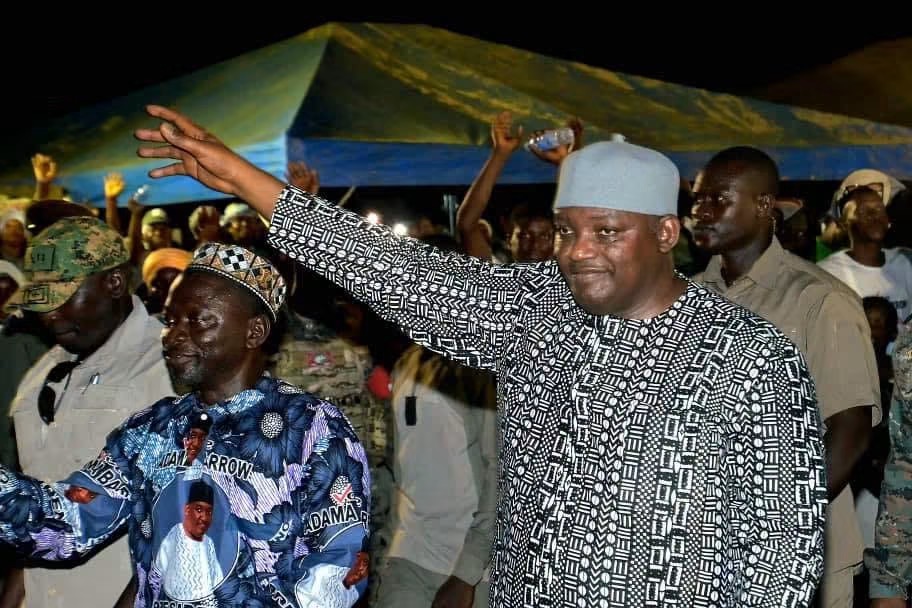
Critics argue that allowing presidents to extend their time in office risks undermining democratic norms in the region.
With the 2026 presidential election approaching, the debate over Barrow’s eligibility, term limits and constitutional reform is likely to remain a major political issue.
Gambiana will continue to follow developments ahead of the election.
By Modou Jobe





Recent Comments