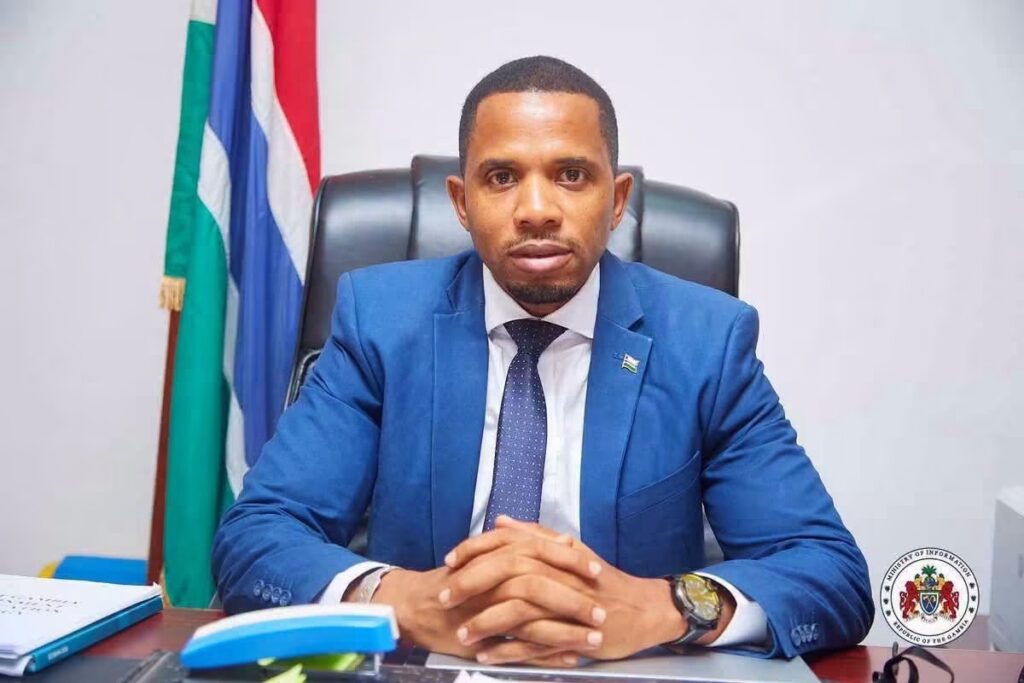
Information Minister Dr. Ismaila Ceesay has dismissed suggestions that The Gambia’s worsening electricity crisis could derail President Adama Barrow’s bid for another term in office.
With power shortages becoming one of the biggest public issues ahead of the December 5 presidential election, Dr. Ceesay said voters would look beyond the electricity crisis when assessing the Barrow administration.
Speaking on QTV, the Information, Media and Broadcasting Services Minister argued that the government’s wider record should be taken into account, including investments in electricity, roads, health facilities and other infrastructure.
“Of all the investments and achievements the president has done, I don’t think a single challenge should really cost us the elections,” Dr. Ceesay said.
“Gambians are smarter than that.”
The comments come at a difficult time for the government, with frequent power disruptions causing frustration among households and businesses and drawing criticism from opposition politicians and activists.
But Dr. Ceesay pushed back against the idea that the electricity situation would define the government’s entire record.
He said electricity access had expanded significantly under President Barrow, particularly in rural communities that had spent decades without power.
“Gambians know, for the first time in the history of this country, we have stable, guaranteed electricity in this country,” he said.
The Minister acknowledged that the country was currently facing serious problems with electricity supply but argued that governments inevitably encounter challenges while trying to address multiple national priorities.
He said voters should therefore consider not only the problems they are experiencing but also the government’s response to those problems.
Dr. Ceesay pointed to Banjul as one example of what he described as the administration’s development record.
He said the capital had witnessed significant improvements since Barrow assumed office.
The Minister also highlighted developments in rural areas, naming Kabada and Nianija among communities he said had benefited from government investment.
According to Dr. Ceesay, some residents in those areas had previously lived without paved roads, health facilities, schools, ambulances and electricity.
He argued that the expansion of basic services should form part of the public’s assessment of the government.
Dr. Ceesay also sought to put the current electricity debate into historical context.
He said many Gambians had lived for decades without electricity but continued to participate in elections, suggesting that voters had always had to weigh different challenges and government priorities.
His comments come as electricity supply increasingly dominates public conversations about the government’s performance.
The issue has also become politically sensitive, with opposition figures accusing the government of failing to adequately address recurring power disruptions.
The government has defended its record while acknowledging the problems facing the electricity sector.
Dr. Ceesay said President Barrow had accepted responsibility for the situation, apologized to Gambians and taken steps intended to improve the power supply.
By Adama Makasuba





Recent Comments