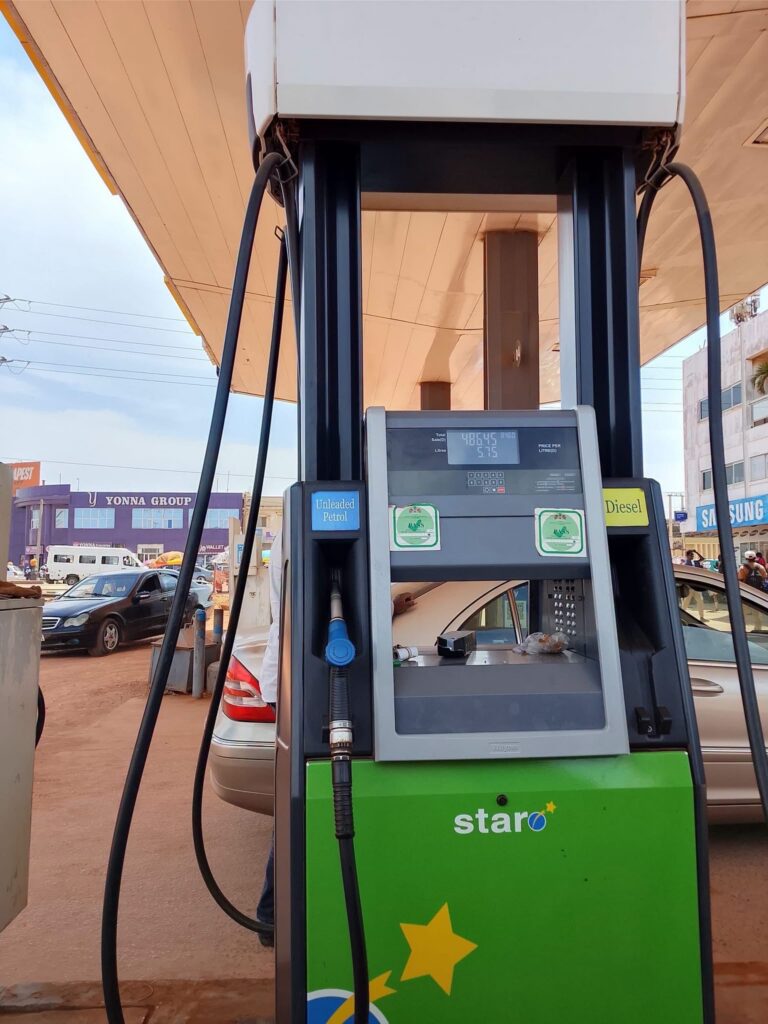
The Gambia government increased the retail pump price of petrol to D109.80 per litre for September 2026, citing rising international crude oil and refined petroleum product prices.
The new prices, approved by the Government through the Ministry of Petroleum, Energy and Mines, take effect from September 1, 2026.
Under the revised prices, petrol, also known as PMS, will sell at D109.80 per litre, while diesel, or AGO, will cost D120 per litre.
Kerosene has been set at D112.64 per litre.
The Ministry said the adjustment is primarily driven by continued increases in international crude oil and refined petroleum product prices.
It attributed the global price pressures largely to the ongoing conflict and instability in the Middle East, a key region for global energy supplies.
According to the Ministry, the conflict has increased uncertainty in international oil markets and heightened concerns about possible disruptions to production, refining and the transportation of petroleum products.
The Government said The Gambia’s heavy dependence on imported petroleum products means developments in international markets have a direct impact on fuel prices domestically.
It acknowledged that the higher prices could place additional pressure on households, businesses and transport operators.
However, the Ministry said the adjustment reflects prevailing international market conditions and is intended to ensure the continued availability of petroleum products in the country.
The Government said it will continue to closely monitor developments in the international oil market and take appropriate measures in line with the country’s established petroleum pricing framework.
The latest adjustment means consumers and businesses will face higher fuel costs from the beginning of September, with potential implications for transportation and other activities dependent on petroleum products.
The Ministry appealed for the understanding and cooperation of the public and stakeholders as the Government responds to continued challenges in the global energy market.
By Adama Makasuba







Recent Comments