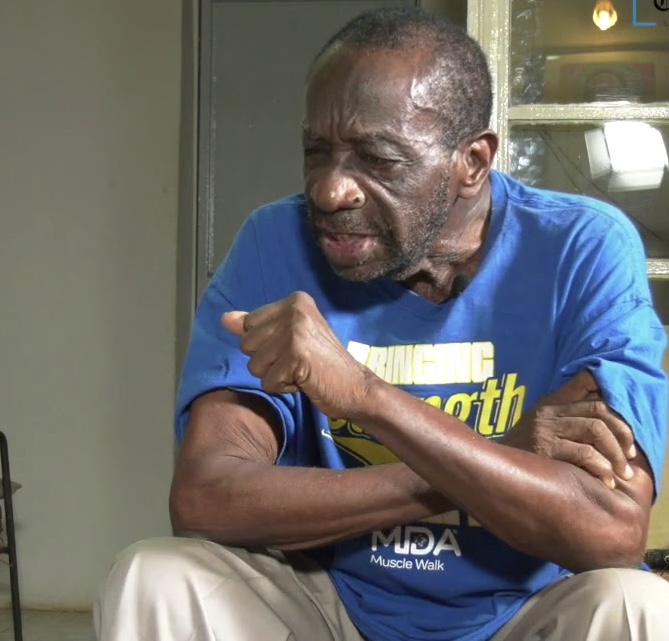
The Writers’ Association of The Gambia mourns, with profound sorrow, the passing of Gabriel John Roberts — better known across generations of Gambian letters as Gabriel J. Roberts — a founding father of modern Gambian literature, a distinguished educationist, and one of the last living links to the pioneering literary movement that gave our nation its written voice.
He passed away on Monday, 20 July 2026, at the age of 100.
A Life of Learning and Letters
Gabriel John Roberts was born in 1926 in Bathurst, now Banjul. He pursued his studies in Great Britain, where he earned a Master’s Degree and a Post-graduate Diploma in Education.
He returned home to devote the greater part of his life to the education of his countrymen and women, rising through decades of dedicated service to become Director of Education — a position from which he shaped the intellectual formation of an entire generation.
His conviction that a nation is built in its classrooms never left him.
Even in his later years, he remained an ardent champion of young writers, urging them, as he once put it, to aim high and strive to achieve.
A Founding Voice of Ndaanan
In 1971, Gabriel J. Roberts joined a small band of visionaries — among them Dr. Lenrie Peters, Swaebou Conateh, Charles Jow, Hassan I. Jagne and others — to found Ndaanan, the first literary magazine ever published in The Gambia.
The Wolof word Ndaanan means “champion,” and champions they were: they built the very foundation upon which Gambian literature would rise.
As a member of its editorial board, Roberts helped open a space for creative Gambian writing where none had existed before.
It was in the pages of Ndaanan that several of his own plays first reached readers, including Mandingerio Outwitted and A Coup is Planned.
The magazine he helped create remains a cornerstone of our national cultural memory — a legacy WAG has laboured to restore and preserve for the generations who follow.
A Pioneer of the Gambian Stage
Gabriel J. Roberts earned the rare distinction of having two of his plays broadcast on the BBC.
His celebrated courtroom drama The Trial of Busumbala was performed on the BBC on 2 August 1970 and published in 1971 by Heinemann in Nine African Plays for Radio — the first time a Gambian theatrical work won external recognition of its quality.
He was 44 years old, and with that milestone he opened the doors of the theatre in The Gambia, marking a path that authors after him would follow.
His creative range was vast. In 1988 he published his first novel, The Goosieganderan Myth, an allegory of nationhood and the fragile bonds between neighbouring peoples.
His poem Election Day, chronicling the historic 1951 Bathurst elections across five installments in the Gambia Echo, stands today as a vivid literary record of a defining moment in our nation’s political awakening.
A Servant of the Nation
Beyond the classroom and the written page, Gabriel J. Roberts gave himself to public service, notably as Chairman of the Independent Electoral Commission.
It was a fitting role for a man whose fascination with the democratic process reached back to his earliest verse — a life in which the educator, the artist, and the public servant were never truly separate, but bound by a single devotion to the good of his country.
The Association’s Farewell
With the passing of Gabriel J. Roberts, The Gambia loses one of the last surviving architects of its literary tradition.
He belonged to that extraordinary generation who dared to imagine a written Gambian culture into being, and who left us the Ndaanan legacy as their gift.
Every Gambian writer working today stands, whether they know it or not, upon the foundation he helped to lay.
The Writers’ Association of The Gambia extends its heartfelt condolences to his family, his friends, his former students, and the wider community of Gambian writers and readers who are the inheritors of his labour.
We honour a champion — a true Ndaanan — whose pen served his nation for the better part of a century.
May he rest in eternal peace, and may his legacy endure in every story yet to be written.
By Professor Cherno Omar Barry
President, Writers’ Association of The Gambia




Recent Comments