Part VI
For years, the hijacked name of the Daily Observer has served as a digital cudgel for Staff Sergeant Alhagie Mbai, a man who abandoned late Pa Nderry Mbai’s Freedom newspaper, his brother’s legacy, and retreated into a maze of fake accounts, stolen photographs, and anonymous attacks.
Today, two victims, Professor Brahima Mbodje, a distinguished academic from Niamina, and Fulani Tukulor, once a family friend; Alhagie Mbai brewed attaya for him and his brother Pa Nderry in Raleigh, North Carolina, step forward to expose the cruelty, cowardice, and moral emptiness behind his online misconduct. Their testimonies reveal not only the anatomy of a deception, but the greater civic danger posed when anonymity becomes a weapon and a respected newspaper’s name becomes a disguise.
In every society, a moment comes when private wounds illuminate public truths. The unraveling of Alhagie Mbai’s digital misconduct is one such moment, a moment when the testimonies of ordinary Gambians reveal the anatomy of a deception long hidden behind the hijacked name of the Daily Observer.
For years, Mbai operated behind a chorus of fake photos and fabricated identities: “Papa Njie,” “Arfang Madi Sillah,” “Kgnitins Famandts,” “Kebeli Demba Nyima,” each one a mask designed to amplify his attacks while concealing his hand. He pretended to be a newsroom. In truth, he was a one‑person factory of malice. His digital empire was built not on truth, but on impersonation; not on journalism, but on humiliation; not on courage, but on anonymity.
He believed that anonymity could shield him from accountability. But anonymity is a fragile refuge, and truth has a way of smoking out those who hide from their own names.
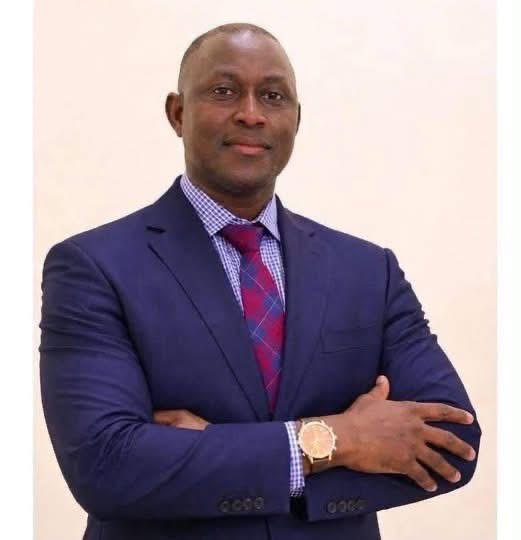
Among the voices now emerging is Professor Brahima Mbodje, a distinguished Gambian academic from Niamina whose testimony exposes the pettiness and cruelty behind Alhagie Mbai’s attacks.
The professor recalls that the assault began not from any political disagreement or personal conflict, but from a simple academic observation: that Dr. Ceesay did not need a PhD in political science to teach political science, provided he had sufficient knowledge of the subject. It was an intellectual point, made in good faith, grounded in academic practice. Yet it was enough to provoke Mbai’s wrath.
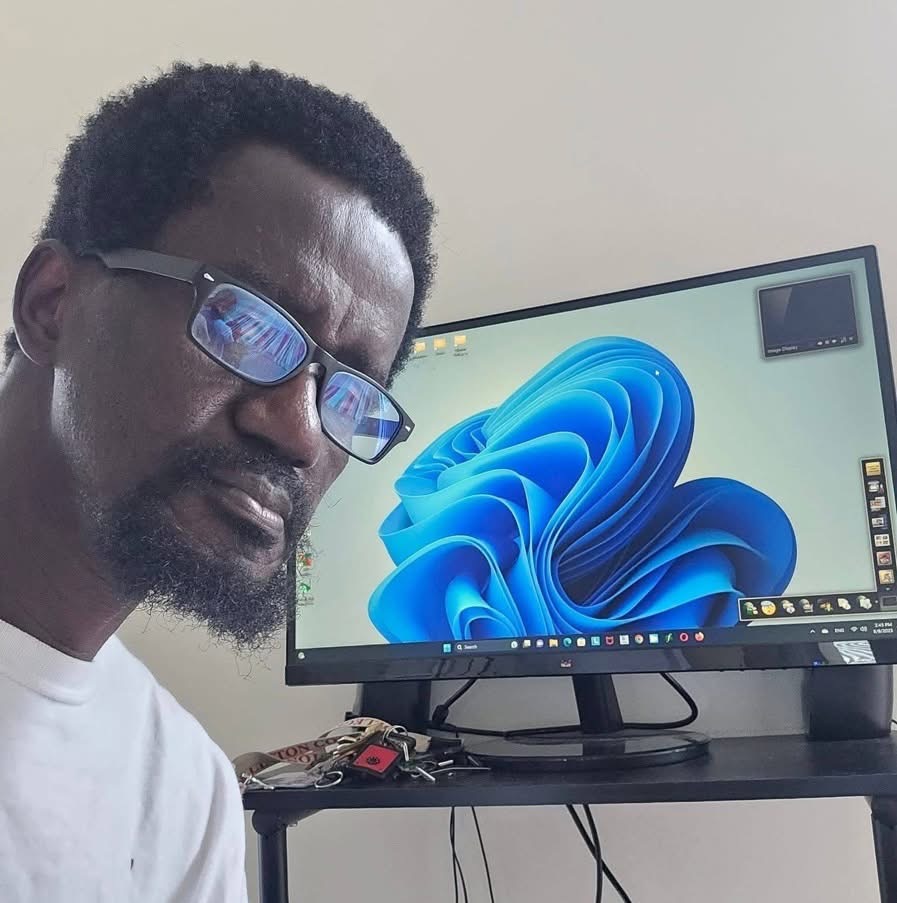
“He mounted an attack against me out of thin air,” Professor Mbodje recounts. “He said he would teach me English grammar. His entire theory was based on some typos I made while rushing from one terminal to another, trying to catch my plane from Banjul to Munich, Brussels, and Charlotte. Who cares to make grammar their number one priority on Facebook?”
The professor’s words reveal the attack’s absurdity. They expose a man who seized upon a typo as an opportunity for humiliation, mistaking cruelty for intelligence and believing that correcting English on Facebook could substitute for moral character. But Professor Mbodje’s testimony goes deeper, revealing a pattern of cowardice.
“He has been hiding ever since behind multiple nicknames,” he says. “Attacking whomever he doesn’t like. But in this world, one may run and hide for a while. Ultimately, one is smoked out.”
Then comes the line that pierces through the fog of Mbai’s behavior: “He looks depressed and unhappy. He should get himself a peaceful life.”
It is a diagnosis not of intellect, but of spirit, a recognition that cruelty often springs from inner turmoil. The second testimony comes from Fulani Tukulor, whose experience adds another layer to the portrait of Mbai’s misconduct.
His account is painful not only for its cruelty but for its betrayal. Mbai attacked him for taking a photograph with President Barrow during his work upcountry. The accusation that he was “benefiting from Barrow” was baseless, petty, and malicious. But what makes his testimony even more striking is its personal history. “If true, I would be disappointed,” he writes. “This is the same dude who brewed attaya for me and his brother Pa Nderry.”
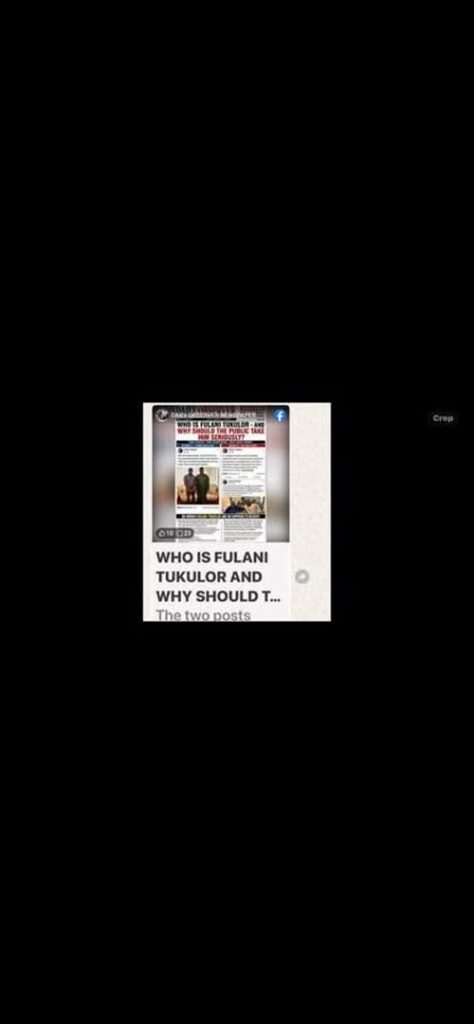
Here lies the deepest wound: Mbai attacked someone who once lived with him in North Carolina, someone who brewed attaya for him, someone who treated him as a brother. Cruelty toward strangers is one thing. Cruelty toward those who once cared for you is another. It reveals not only vindictiveness but moral emptiness.
Taken together, these testimonies expose the architecture of Sergeant Alhgie Mbai’s digital misconduct. They reveal a man who hides behind fake accounts because he fears his own identity. They reveal a man who humiliates scholars because he cannot withstand intellectual debate. They reveal a man who attacks former friends because gratitude is foreign to him. And they reveal a man who hijacked the name of the Daily Observer because he needed borrowed legitimacy to mask his cowardice.
The tragedy is not merely personal; it is civic. It shows how easily someone who fears accountability can impersonate a respected institution. It shows how anonymity can be weaponized to poison public discourse.
And it shows how the digital space, once a refuge for truth, can become a theatre for deception. Professor Mbodje’s words echo again, with the clarity of a moral verdict: “One may run and hide for a while. Ultimately, one is smoked out.” And so it is.
The hijacked Daily Observer Online is not journalism. It is not commentary. It is not critique. It is a weapon, a digital cudgel wielded by a man whose conscience has long been compromised.
It is the behavior of someone who abandoned the legacy of his own brother, Pa Nderry Mbai, and instead chose the shadows over the light. The republic deserves better. The victims deserve better.
And Gambian journalism deserves better.
This edition is written not out of malice, but out of civic duty, to protect the public from misinformation, to defend the dignity of those he has smeared, and to remind Gambians that character, not anonymity, is the true measure of a man.
In the end, every deception exhausts itself, every mask slips, and every false empire collapses under the weight of its own cowardice. What remains, what always remains, is character. And character, unlike anonymity, cannot be faked, borrowed, or hidden. It stands in the open, unafraid of its own name.
In the end, truth walks with its own feet, character stands with its own spine, and every mask falls under the weight of its own falsehood. What remains, what always remains, is the integrity we choose when no one is watching. That is the measure of a life, and the only legacy worth leaving.
By Alagi Yorro Jallow




Recent Comments