Part One
There is a particular kind of invisibility that has nothing to do with not being seen. You can be seen every day – at the market, behind a stall, at the sewing machine, and still have the thing you built exist nowhere on paper. No name on it. No record that you were the one who made it.
The product is out there, the brand is growing, and the customers know your face. And yet, formally, officially, in the language the system speaks? Nothing.
That is the gap this piece is about, absence. Not absence from the economy, Gambian women have never been absent from that, but absence from the protection the economy is supposed to offer the people who build it.
The law promises protection, but rights you do not know you have cannot defend what you have built. Intellectual property law exists to bridge that gap.
At its best, it gives legal protection and recognition for our creations: a brand, an invention, a design, and transforming them from invisible labour into protected assets. In the Gambia, those tools are technically available.
This piece captures lived realities that are not told nearly enough: four women, four businesses, four corners of the Gambian economy, and each of them found the IP system and came out changed.
Now, threaded through their stories is something else: a programme that, for the first time in this country’s history, deliberately built a road to those women rather than waiting for them to find the door.
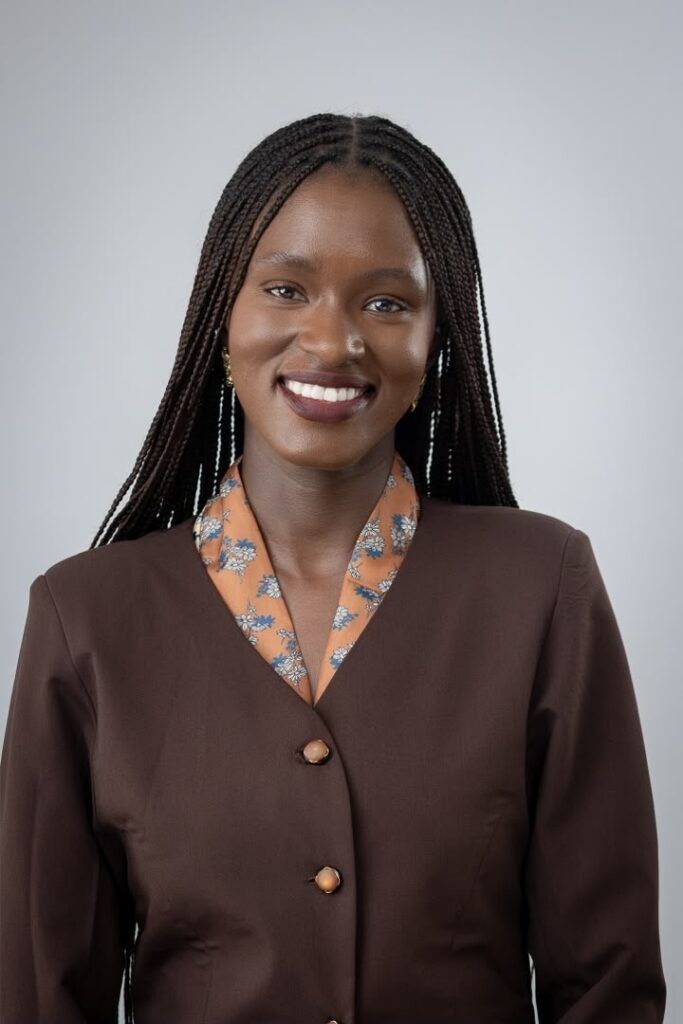
Mariama Sarge and Mese Energy Solutions
“I was already innovating. I just didn’t know it had value,” says Mariama Sarge, founder and CEO of Mese Energy Solutions.
Before Mariama Sarge understood intellectual property, she was doing what she had always done: building things that worked.
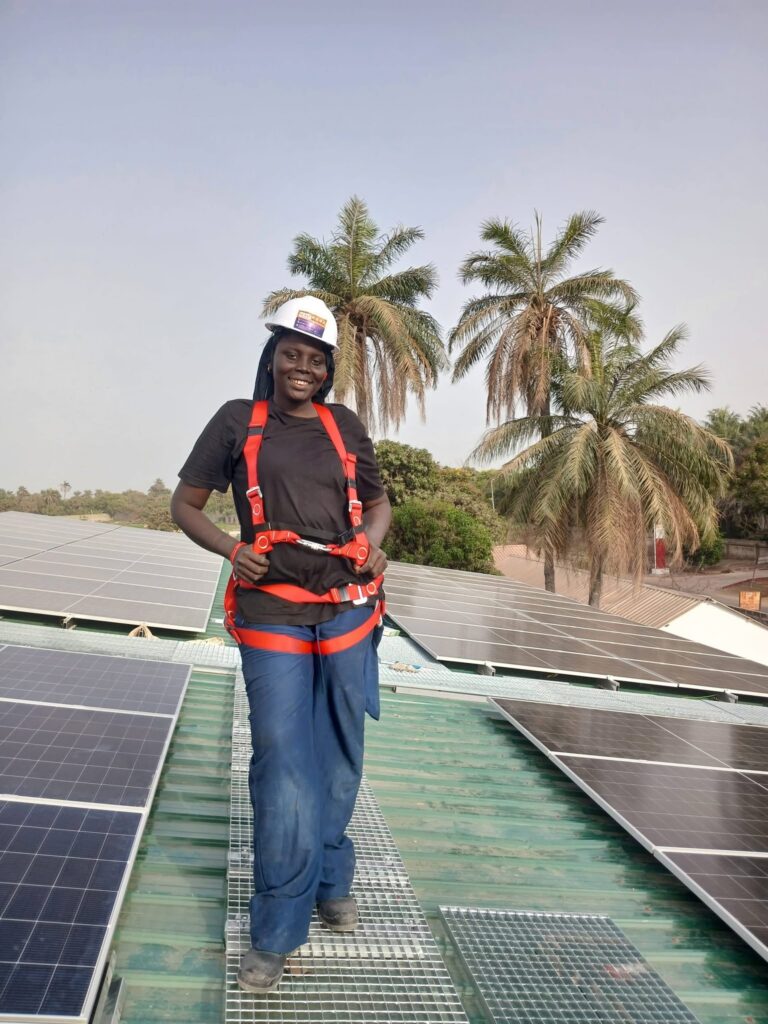
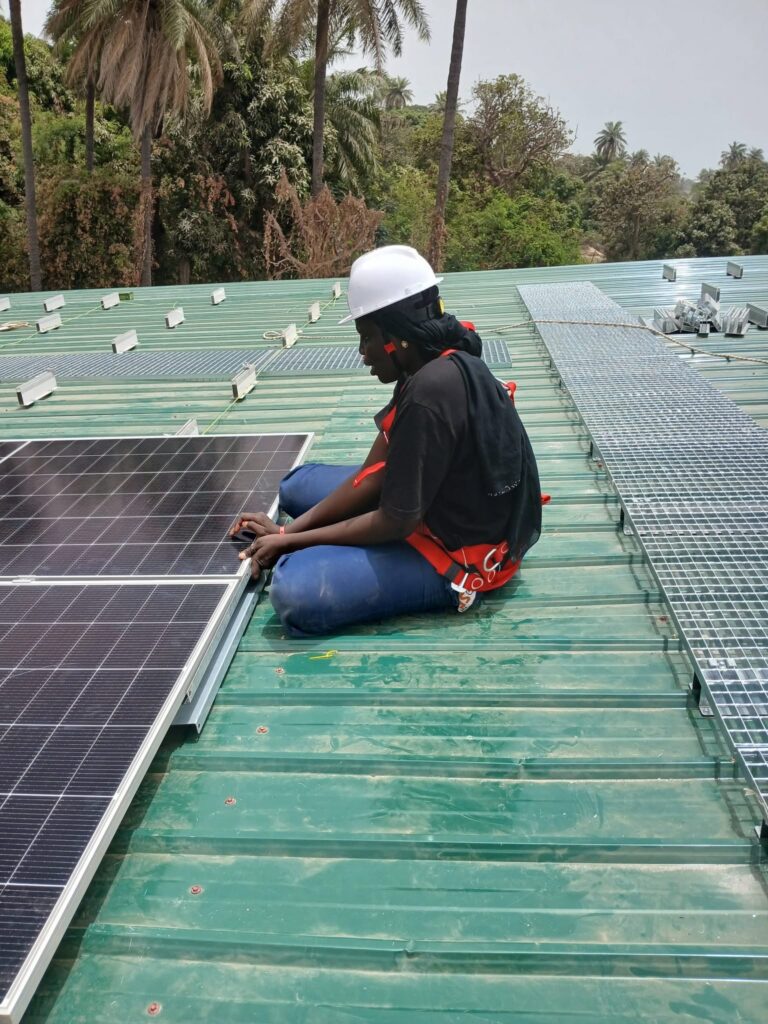
She runs Mese Energy Solutions, a solar installation business in a field where simply being taken seriously as a woman is its own daily task. Along the way, she designed a multifunctional solar-powered cart for street vendors, a single unit with a built-in fridge, gas cooker, juice presser, fruit peeler, thermal flask, and charging system.
She built it because she saw a problem and wanted to provide a solution. She shared the idea freely. It did not occur to her that she owned it.
“Before I understood intellectual property, I was already innovating,” she told me. “I just didn’t know it had value beyond the work itself,”
Think about the last sentence again, a woman designing and building a solar-powered system from the ground up, and the thought that it could be legally hers ‘protected, documented, owned’ had simply never arrived.
This is not because was not capable of holding that thought, but because nobody had brought it to her. Being selected for the WIPO IP+ Accelerator Programme changed that.
What followed was not a simple path. Mariama said, “I had to learn a completely new language, legal and technical, and translate a hands-on invention into formal documentation. The process also takes time, which can be difficult when you are running a business that needs to move fast.“
In 2023, Mariama Sarge became the first woman in Gambian history to register a utility model, the IP protection available for practical inventions. First, in the entire recorded history of the country, in 2023.That should sit with us for a moment.
Registration did more than recognize the invention. It simply change the way she approached her entire business. She now uses non-disclosure agreements with her welders and technicians, and she has restructured Mese Energy Solutions from a sole proprietorship into a partnership model built for growth.
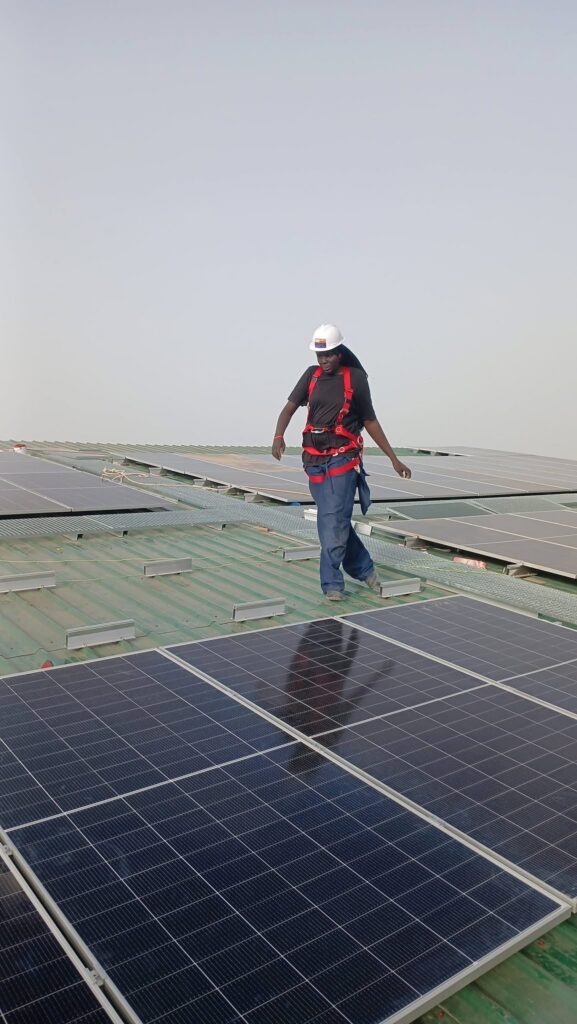
She is exploring franchising and investment and working toward international protection through the Patent Cooperation Treaty. She has received a Women in STEM award and been invited to international platforms through UNESCO and the ICESCO A-HUB Accelerator.
None of this existed before the registration. All of it happened after. Mariama shared that
“Today, I treat my ideas as assets. I am more strategic about what I share and who I share it with. Competitors no longer just see me as a small business – they see structure, innovation, and ownership.”
She is also honest about what has not changed: awareness of IP remains low, most entrepreneurs encounter it too late, and the process is slow relative to the speed of running a business.
Scaling, the question of what comes after protection, remains its own challenge, with funding gaps that registration alone cannot close.
“Without support,” she says, “it would have been very difficult.”
She is truly not complaining, she is just being precise.
Her message to other Gambian women with ideas is direct: “You are already innovating, don’t overlook it. IP is not only for big companies, but it is for anyone building something new.”
By Fatou Mbenga LLB (Hons), MIP







Recent Comments