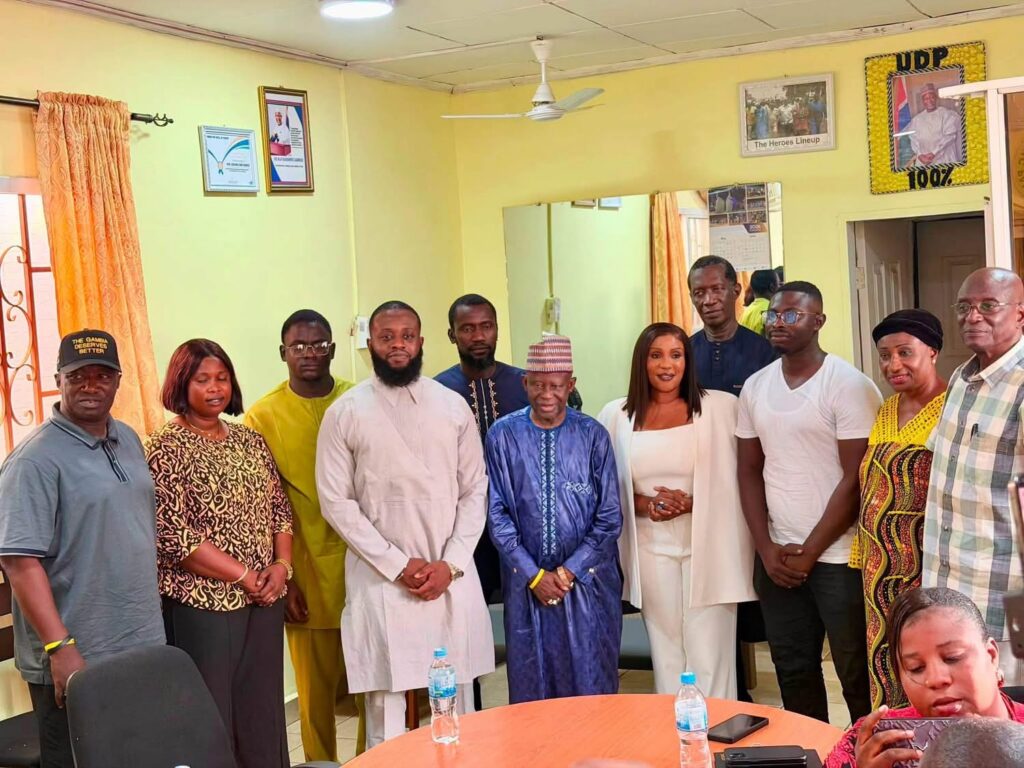
A political partnership has collapsed after the Golden Era Party (GEP) announced its withdrawal from the People’s Progressive Party (PPP), accusing the party leadership of contradictions and delays over a proposed alliance with the United Democratic Party (UDP).
GEP Leader Saikou Sawo confirmed that his party was ending its partnership with the PPP with immediate effect, saying the decision followed a loss of confidence in the relationship and the way key political decisions were being handled.
In a letter addressed to the PPP leadership, Sawo said the split was not taken lightly but was driven by what he described as “evident hypocrisy” among some party executives over the proposed PPP-UDP alliance.
The Golden Era Party leader argued that negotiations with the UDP were conducted with the knowledge and approval of the PPP leadership through a duly constituted Coalition Negotiation Committee.
“At no point did we engage any political party without his knowledge or approval,” Sawo said.
He maintained that the alliance agreement was drafted by the PPP Policy Director and that the negotiating team acted within the authority given to them.
Sawo also rejected claims that he breached party procedures, saying the PPP’s constitutional processes were respected and that the agreement had not been finalised without proper consultation.
The former PPP flag bearer said his participation in a UDP press conference on supplementary voter registration was unrelated to the proposed alliance, arguing that the issue was about protecting the integrity of The Gambia’s democratic process.
He said concerns over thousands of eligible voters allegedly missing from the registration process should not be viewed through a political lens.
But the PPP has pushed back against Sawo’s claims, saying the issue was not about opposing political cooperation but about unauthorised representation of the party.
In an official statement, the PPP said it respected Sawo’s decision to leave but insisted that the proposed UDP alliance remained under constitutional review and had not received final approval from the party.
“No alliance agreement becomes binding until it has been duly considered and approved by the Party’s constitutional organs,” the PPP stated.
The party said negotiations with the UDP were conducted in good faith through a committee established by the leadership, but any final agreement required approval from the party’s constitutional structures.
The PPP accused Sawo of publicly associating the party with the UDP without authorisation, creating confusion among members and supporters about the party’s official position.
The party pointed to Sawo’s appearance at a UDP press conference as PPP flag bearer, saying the move was neither communicated to nor approved by the leadership.
“The issue was one of authorization,” the PPP said.
The party’s Board of Trustees, it explained, issued an advisory letter to Sawo as part of its responsibility to protect internal discipline, unity and constitutional order.
The PPP rejected suggestions that its internal procedures were delaying political decisions, arguing that strong institutions depend on consultation and adherence to rules.
“No individual, regardless of office, is above the Constitution of the Party,” the PPP said.
The dispute now marks a major break between the two political groups, with the Golden Era Party moving away from the PPP while questions remain over the future of the proposed PPP-UDP alliance and its impact on the country’s political landscape.
By Adama Makasuba







Recent Comments