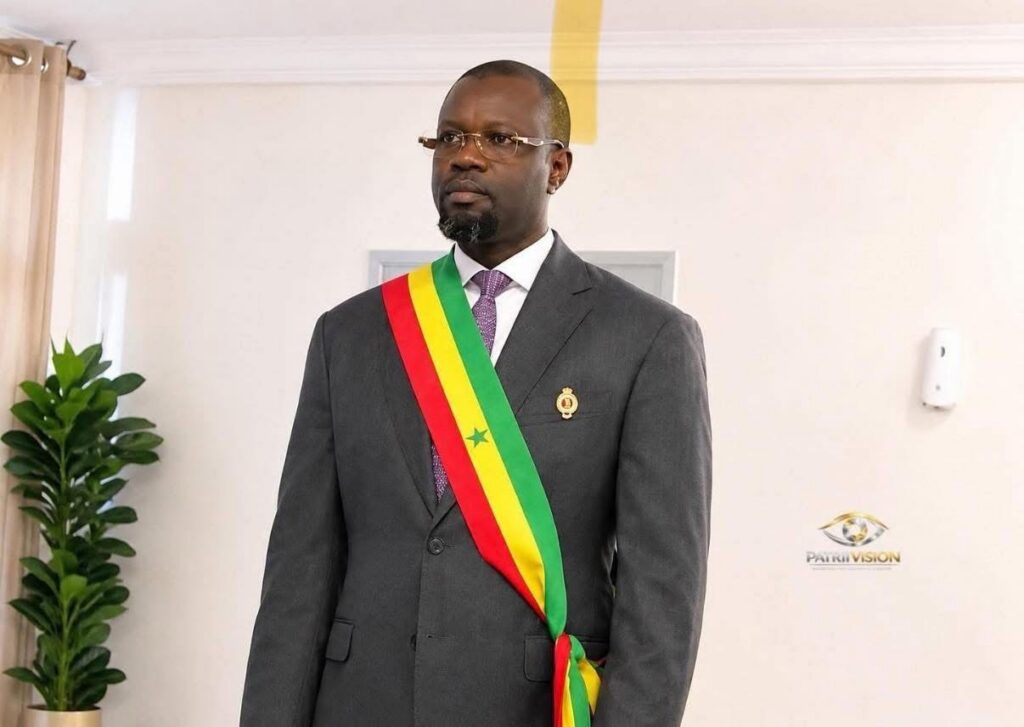
With El Malick Ndiaye stepping down as president of the National Assembly, talk is buzzing about Ousmane Sonko’s potential comeback to the chamber. Yet the constitutional framework paints a different picture, in which resignation, non‑retroactivity, and respect for institutional integrity leave little room for political maneuvering.
A leadership gap in the Assembly, a Prime Minister removed from office, and a country split between upholding the law and pursuing political aspirations: Senegal faces a tough line between legal limits and public hopes.
El Malick Ndiaye’s resignation sparked a heated debate. Can Ousmane Sonko take back the parliamentary seat he gave up in December 2024? Could he legally become President of the National Assembly? The answer lies in the Constitution, the Electoral Code, and the Rules of Procedure. It is less flexible than Sonko’s supporters hope.
The law is clear. Sonko’s mandate is over. Once again, Senegal stands between legal rules and political possibilities. The removal of Ousmane Sonko as Prime Minister and El Malick Ndiaye’s stepping down have ignited a heated national conversation. People debate whether Sonko can return to the Assembly or legally take its presidency.
In today’s political scene, symbolism often overtakes process. Clarity is vital. People in Senegal must know what the law allows, prohibits, and what is political wishful thinking. On 2 December 2024, when the 15th Legislature was installed, Ousmane Sonko formally resigned from his parliamentary seat.

This was not symbolic, provisional, or suspended. It was a legal act—registered, accepted, and executed in accordance with the rules then in force.
Article 54 of Senegal’s Constitution makes it clear: you cannot hold a ministerial and parliamentary seat at the same time. The Electoral Code and the National Assembly’s Rules of Procedure reinforce this. Any deputy appointed to the government must resign from the conflicting role within eight days. You cannot suspend, freeze, or withdraw the mandate temporarily.
Once the resignation is accepted, the seat passes to the next on the list, and the mandate is irreversibly lost. This is not about politics; it’s simply the law.
The 2025 Organic Law doesn’t apply to Sonko. The confusion stems from Organic Law 2025‑11, which added a rule allowing deputies who join the government to automatically regain their parliamentary seat upon leaving the cabinet.
This change puts Senegal in line with parliamentary systems like France’s, but it only took effect on August 27, 2025 — eight months after Sonko stepped down. The principle of non‑retroactivity in constitutional law means you can’t revive a mandate that no longer exists or apply a new law to something that happened before it was passed.
Since Sonko resigned under the old system, the new law doesn’t affect him, and his mandate can’t be reinstated.
Legal and parliamentary experts agree: El Malick Ndiaye’s resignation changes nothing. Some see the PASTEF deputy’s move as political, perhaps even a step toward helping Sonko return.
Parliamentary seats are not personal property in Senegal. They belong to the party list. Vacancies are filled by the next eligible candidate. A resignation does not free up a seat for any political figure, no matter how influential. El Malick Ndiaye’s departure creates a vacancy, but not for Ousmane Sonko.
Can Sonko become President of the National Assembly? The answer is clear. Only sitting deputies can hold this post. Sonko is not a deputy and cannot become one under the current law. This is not about political will but constitutional requirements.
Senegalese politics often blurs the line between law and political desire. Sonko is still the country’s most influential political figure. His supporters see him as essential for the legislature.
His removal as Prime Minister created a vacuum. El Malick Ndiaye’s resignation looked like a signal. But political desire does not overrule constitutional process. Sentiment cannot reshape institutions. The rule of law cannot bend for charisma. Senegal’s democracy is strongest when institutions matter more than personalities.
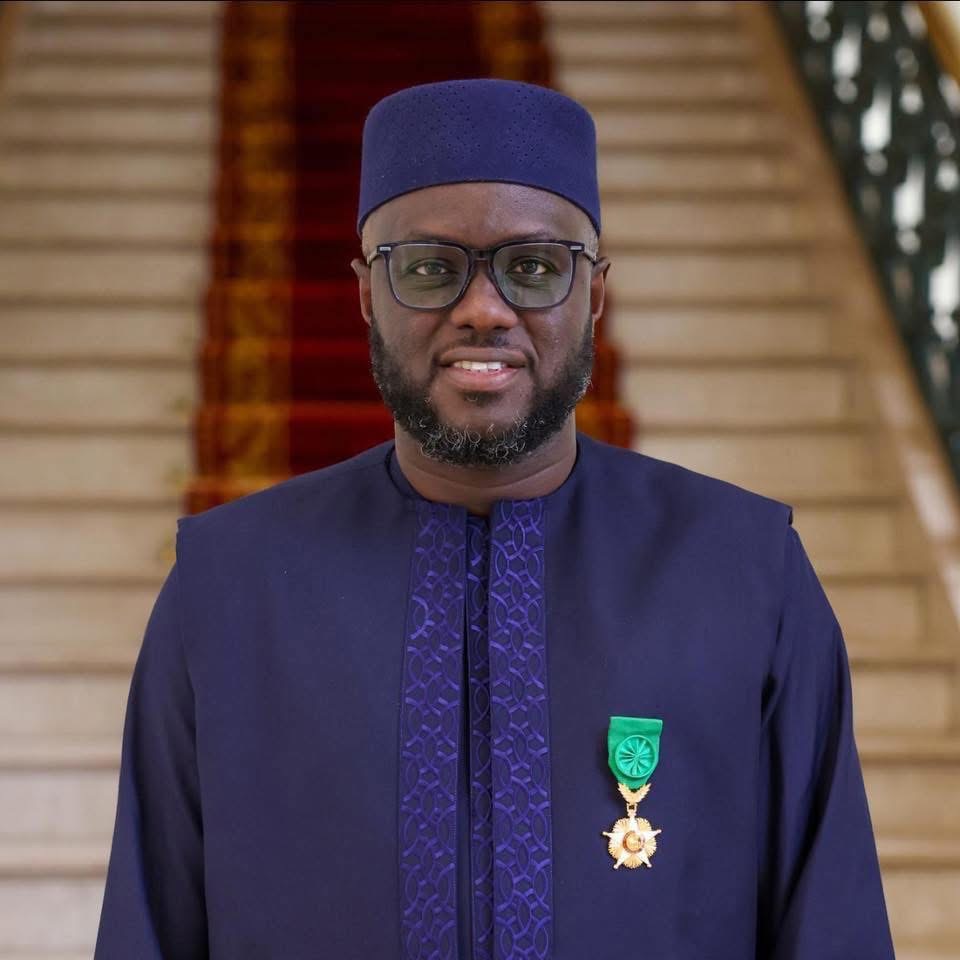
What can Sonko do and what can’t he? Ousmane Sonko can’t return to the National Assembly, can’t become its President, and can’t reclaim a mandate he willingly gave up.
But he can, and surely will, keep influencing Senegalese politics from outside the Assembly. He’s still the driving force behind the ruling movement, the architect of its vision, and a key figure in the country’s story. His absence from the hemicycle doesn’t lessen his influence, but influence isn’t the same as legality.
Senegal is a constitutional democracy, not a theatre of improvisation. The law is not a suggestion. Ousmane Sonko’s parliamentary mandate ended on 2 December 2024, and no subsequent law or resignation by another can revive or transfer it.
No political desire can override it.
The debate may carry on in the streets, across social media, and in the halls of power. But in the realm of law, the one that truly defines institutional legitimacy, the issue is settled. Senegal needs to prioritise the stability of its institutions over the lure of political shortcuts. That’s the real measure of a mature democracy.
By Alagi Yorro Jallow





Recent Comments